














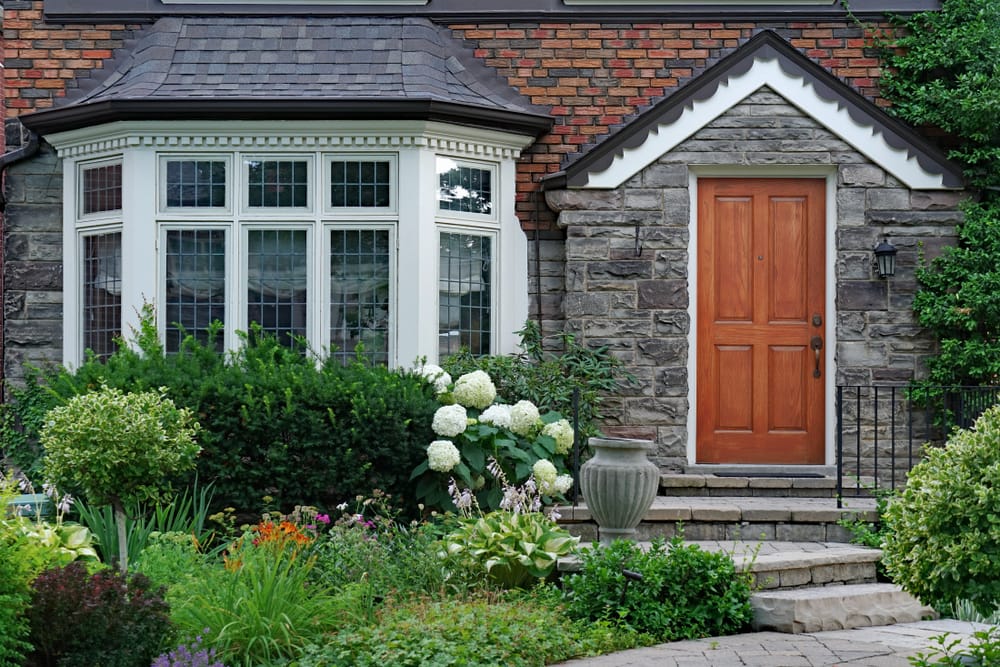
Windows contribute both to the aesthetics and the functionality of a home. Among the most distinctive models are bay windows and arched windows, often chosen for their ability to transform a façade, create a spectacular architectural effect and improve interior brightness. Although they may appear similar at first glance, these two configurations meet different needs in terms of design, space and usage. This guide clarifies their specific features, advantages and applications to help you choose the solution best suited to each residential project.
Understanding the features of bay windows
Les fenêtres en baie, souvent appelées bay windows, are characterized by a structure made up of three or more panels arranged at an angle to create a projection toward the outside. This configuration changes both the appearance of the façade and the perception of interior space. It is especially popular in homes where the goal is to add architectural character or maximize natural light without drastically altering the internal layout of a room.
General composition
A classic bay window generally includes:
- a central panel, fixed or operable;
- two angled side panels;
- a structural frame supporting the projection.
This construction creates a real volume, giving the impression of an expanded interior space. In many projects, this effect is used to add a functional nook or to break the linearity of a façade, making the whole design more dynamic.
Main advantages
Bay windows offer several notable benefits:
- Space gain: they create a recessed area that can be used as a reading nook, seating area or decorative space, which helps shape a room without adding extra furniture.
- Enhanced natural light: the angled configuration captures light from different directions, reducing shadowed areas and improving natural brightness even in winter.
- Façade enhancement: the projection adds distinctive architectural relief, often sought after to give prestige to main façades.
- Broader view: the panels provide a panoramic field of vision, ideal in open environments or where there are attractive views.
These benefits help improve the sense of comfort and volume in a room, giving the impression of a more generous, brighter and more welcoming living space.
Possible variants
Several configurations exist, including:
- traditional bay windows;
- bay windows with a fixed central panel;
- bay windows combined with operable units;
- bays with sharper or softer angles depending on requirements.
Each variant changes the balance between ventilation, brightness and aesthetics. The choice generally depends on the constraints of the building, the desired level of light and how the projected space will be used.
Also discover the advantages and disadvantages of a bay window
Understanding the features of arched windows
Arched windows stand out thanks to their recognizable shape: the upper part is rounded, creating a smooth curve. They are often installed above a rectangular window but can also form a complete unit. This configuration is appreciated in projects where the goal is to soften the lines of a façade or introduce a touch of architectural refinement without changing the structure of the opening.
General composition
They usually consist of:
- a lower rectangular section (fixed or operable);
- an upper arch incorporating a curved glazed section;
- a frame adapted to this unique shape.
Their design adds a strong and elegant architectural touch. In practice, these windows are highly effective for creating a visual focal point, especially in hallways, staircases or areas where ceiling height allows their rounded shape to be highlighted.
Main advantages
Arched windows offer several benefits:
- Distinctive aesthetics: their curve adds character to both classic and contemporary façades, creating an immediately recognizable architectural signature.
- Natural light: the rounded upper part increases the glazed surface in elevated zones, allowing more light to be captured throughout the day.
- Sensation of openness: their shape naturally draws the eye upward and softens the line of the wall, giving a sense of height and visual fluidity.
- Adaptability: they can be used alone or combined with other units, depending on the desired effect and space constraints.
They make it possible to assert a strong architectural style while optimizing natural light. This is why they are often chosen in renovation projects where the aim is to modernize a façade without heavy structural work.
Possible variants
Notable variants include:
- full arched windows;
- arched windows installed above a rectangular unit;
- arches that are more or less pronounced depending on the desired style.
Each configuration influences the overall style of the façade. A pronounced arch reinforces a classic character, while a softer curve blends easily into contemporary designs.
Bay windows vs arched windows: detailed comparison
Although both types of windows have a strong visual impact, their functions and uses differ.
The choice depends on the desired style, structural constraints and the effect sought on the interior space.
Comparison table
| Feature | Bay windows | Arched windows |
| Shape | Angled projection toward the outside | Rounded upper section |
| Effect on interior space | Adds extra usable space | Does not change depth |
| Architectural style | Modern, traditional or versatile | Classic, elegant or architectural |
| Light intake | Very high, multiple angles | Light accentuated toward the top |
| Ventilation potential | Depends on configuration | Depends on the lower unit |
| Impact on façade | Visible projection | Decorative curve |
| Installation | More complex, structure must support the projection | Simpler, but custom-made |
| Ideal use | Living rooms, bedrooms, kitchens | Main façades, halls, upper floors |
This comparison helps identify the solution best suited to the desired style and the building’s structure.
In projects where adding functional space is a priority, the bay window is often the obvious choice, while for enhancing the visual elegance of a façade, the arched window remains a preferred option.
How to choose between a bay window and an arched window?
The decision depends on several practical and aesthetic parameters. Each one determines how harmoniously the window will integrate into the home, whether in terms of comfort, appearance or technical constraints.
1. Available interior space
Bay windows require sufficient structural depth to support the exterior projection. They are particularly suitable for:
- spacious rooms;
- areas where you want to create a seating nook;
- façades with architectural flexibility.
Arched windows, on the other hand, do not encroach on the space and integrate better into more confined environments. They are often chosen when the aim is to enhance an existing opening without major structural changes.
2. The architectural style of the house
Bay windows and arched windows integrate differently depending on the architecture of the home, and their visual impact can completely transform the exterior appearance.
Bay windows work particularly well with:
-
Victorian, colonial or cottage-style homes, where their projection toward the outside enhances traditional charm.
-
Modern homes, when you choose clean lines and larger glazing: the bay window then becomes a geometric element that adds relief to a minimalist façade.
-
Contemporary residences looking to create extra interior space (reading nook, bench seat or small dining area), which enhances the warm and functional feel.
Arched windows, meanwhile, are known for their ability to bring elegance, softness and verticality. They are ideal for:
-
Classic or Mediterranean-style homes, where curves are already present (arches, columns, balconies).
-
Very simple façades, where an arched window creates a refined focal point and breaks uniformity.
-
Luxurious residences or tall main entrances where you want to add a distinctive architectural touch without overloading the structure.
In short, the bay window plays a more sculptural and functional role, while the arched window provides a subtle yet striking architectural signature. The choice therefore depends as much on the existing style as on the atmosphere you want to create.
3. Desired light intake
Bay windows and natural light
The orientation of the house and the need for natural light strongly influence the choice between a bay window and an arched window.
The bay window:
-
Captures light from several angles thanks to its angled glass panels, which creates a more intense and more diffuse light intake.
-
Is particularly effective in rooms facing east or west, where the morning or evening sun enters generously.
-
Visually amplifies the interior space: the room appears larger, more open and more airy.
-
Can even improve natural ventilation, especially if the side panels are operable.
Arched windows and vertical light
The arched window, for its part:
-
Provides more vertical and filtered light, which creates a sense of height and highlights specific areas of the room.
-
Is ideal for bringing light into a staircase, an entrance hall or a space where light is needed without increasing the depth of the room.
-
Adds a theatrical or majestic effect when placed above a door or combined with transom windows.
-
Is suitable when you want to highlight a focal point (fireplace, artwork, signature piece of furniture) with directed light.
So, to maximize overall brightness, the bay window is hard to beat. To create an elegant atmosphere or showcase an architectural feature, the arched window is the ideal choice.
4. Structural constraints
The choice between a bay window and an arched window also depends on the structure of the house, wall thickness and the ability to support an exterior projection.
Structural constraints for bay windows
Bay windows:
-
Require a wall that is strong enough to support the extra load generated by the projection. This may involve adding support beams or modifying the framework.
-
Can be challenging to install in older houses where load-bearing walls are thick or difficult to alter.
-
Call for very careful sealing, since their angled structure multiplies the junction points exposed to weather.
-
Generally require clear exterior space, which can be an issue in row houses or on small urban lots.
Structural constraints for arched windows
Arched windows, by contrast:
-
Offer a more flexible solution that is compatible with most existing structures.
-
Respect the alignment of the wall and do not require changes to interior or exterior depth.
-
Allow for faster and less expensive installation, since the work does not affect load-bearing elements.
-
Are perfectly suited to high walls, narrow façades or areas where regulations limit exterior modifications.
In short, when the structure allows for a projection and you want to benefit from extra space or maximum light, the bay window is a strong option. When technical constraints are significant or available space is limited, the arched window becomes a logical and aesthetically advantageous choice.
5. Intended use
Questions to ask yourself:
- Do you want to create a reading nook? → bay window.
- Do you want to emphasize the entrance of a hall? → arched window.
- Do you want to modernize a façade? → either one, depending on the desired style.
Fenomax: windows designed for optimal performance
Fenomax offers a selection of high-performance windows designed in Canada to meet local climate demands. Combining robust materials, energy-efficient glazing and designs suited to a variety of architectural styles, Fenomax windows deliver long-lasting performance. Advanced manufacturing techniques further enhance airtightness and overall energy efficiency, whether the chosen model is a bay window, an arched unit or a custom configuration. This integrated approach ensures a harmonious blend of aesthetics, natural brightness and thermal comfort, allowing every window to fit seamlessly into the home.
Conclusion
Bay windows and arched windows each bring a distinct style, increased brightness and a strong architectural impact. Depending on available space, desired aesthetics and structural constraints, either type can perfectly enhance the façade and improve indoor comfort. For high-performance models adapted to Canadian conditions, the Fenomax team can guide you toward durable and harmonious solutions.

