














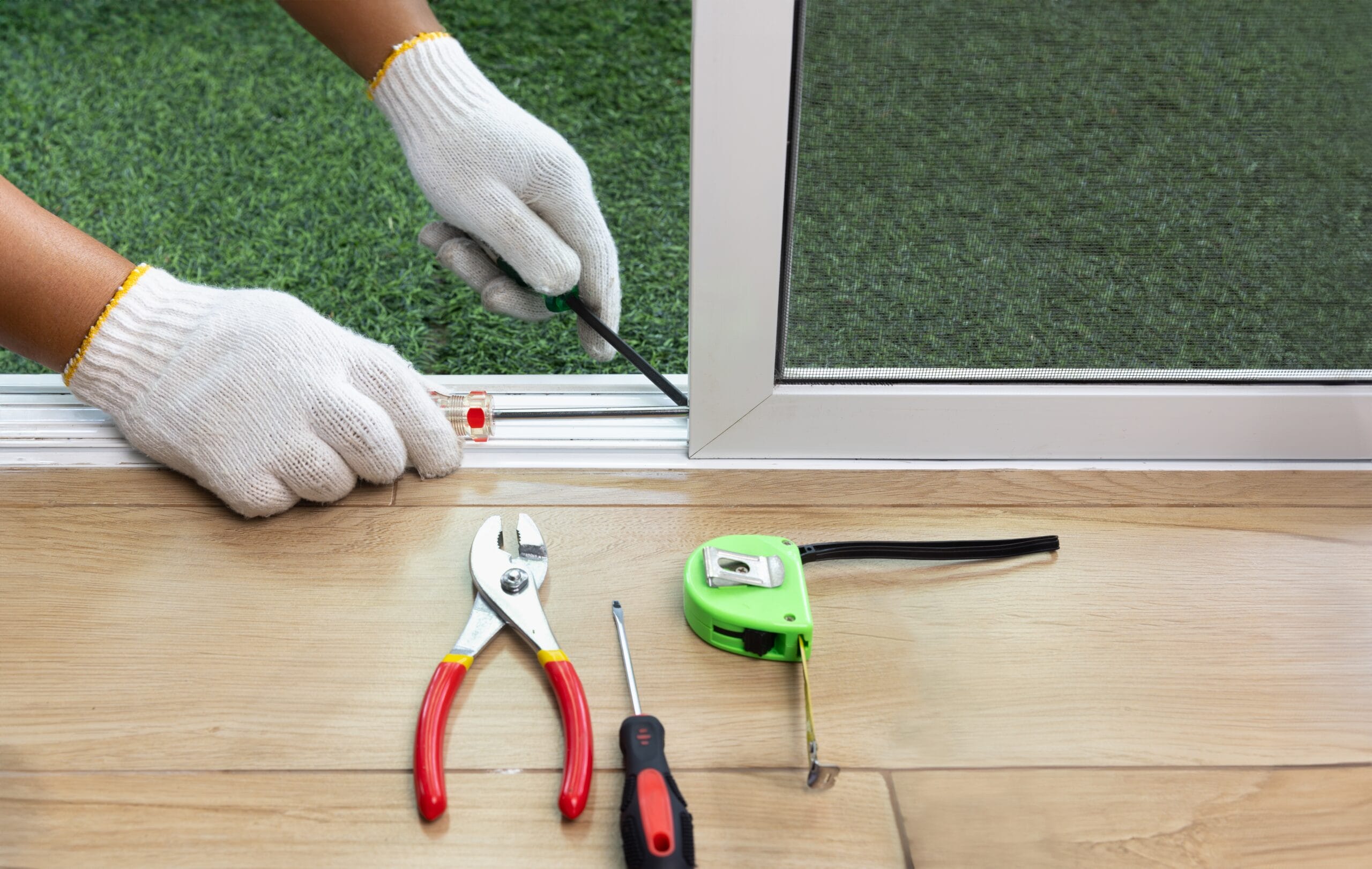
The front door is one of the essential elements of a home’s security. When a misaligned door is not corrected quickly, it can lead to locking issues, loss of weatherproofing, and premature wear of components. A door that sticks, closes with difficulty, or shows signs of squeaking and jamming is never just a minor detail. Understanding the causes and consequences allows for appropriate intervention to preserve both the security and comfort of the home.
Key takeaways
- A misaligned door can compromise a home’s security.
- Poor alignment affects the latch and the strike plate.
- A door that sticks or remains slightly ajar often indicates a problem.
- A poorly positioned frame weakens the structure.
- Hardware and screws must be securely fastened.
- The floor can influence door alignment.
- Simple adjustments can sometimes suffice before having to reinstall the door.
Misaligned doors in the home: understanding the problem
A misaligned door is one whose alignment with its frame is no longer perfectly uniform. The gap between the door and the jamb can vary from one side to the other, preventing the closed door from sealing correctly along its entire perimeter.
In a home, this problem appears for several reasons. Wood reacts to variations in humidity, materials expand or contract, and the flooring can shift slightly over time. Even a minor structural shift can be enough to create a visible imbalance.
When a poorly secured frame warps or shifts, the door operates with resistance. It can become a jammed door at certain times of the day, particularly when weather conditions change. A door that was poorly installed from the start further accentuates these effects.
Security issues caused by poor adjustment
The primary risk of a misaligned door concerns the locking mechanism. The latch must fit precisely into the strike plate to ensure a solid closure. If the alignment is imperfect, the bolt may not fully engage.
Even if the door appears closed, the mechanism may only be partially engaged. This creates a resistance issue. Pressure applied from the outside can then exploit this extra space.
A misaligned door can also create a gap between the door and the frame. This small space makes it easier to insert a tool to pry the door open. The more imprecise the adjustment, the higher the risk. It is important to understand that an alignment issue is not just mechanical; it directly affects the overall strength of the entrance.
How to recognize if a door is sticking or has a problem
Several signs allow you to identify a situation that needs correcting. A door that sticks during opening or produces squeaks and jams often indicates misalignment. If the key turns with difficulty or the lock snags, it may be a problem between the latch and the strike plate.
When the door requires effort to operate or the leaf rubs against the floor, it may signal a slight sagging. The floor plays a more important role than one might think: a minimal structural movement can change the opening angle.
In some cases, jamming becomes more frequent during humid periods. Wood can swell and worsen the adjustment defect. If the situation persists, it is essential to intervene before the hardware wears out prematurely.
Adjusting a door latch and correcting alignment
When misalignment is minor, certain interventions can be performed with basic tools. The goal is to improve the fit without altering the structure.
Begin by inspecting the hinges. Ensure they are well-secured and that no screws are loose. A slightly loose screw is sometimes enough to create play. Simply tightening the screws can allow the door to function normally again.
Next, check the strike plate. If the latch does not align perfectly, it may be necessary to adjust its position. Adjustment screws allow the plate to be moved slightly up, down, or sideways to achieve better contact.
If the problem persists despite these corrections, it may be necessary to reinstall the door. This operation involves checking the complete squareness of the frame and correctly repositioning the door.
The impact of a misaligned door on material durability
Beyond immediate security, a misaligned door can have significant repercussions on the durability of materials. When the door does not rest uniformly against its frame, contact points undergo unequal pressure. This repeated tension prematurely wears out hinges, screws, and all the hardware.
Over time, the wood around the fasteners can weaken, especially if the screws are constantly stressed along an improper axis. This phenomenon can strip the screw holes and make the entire assembly less stable. A door operating under permanent stress eventually accentuates the frame misalignment and complicates any future adjustments. Intervening quickly therefore preserves structural integrity and prevents progressive deterioration.
Why preventive inspection is essential in a home
In a home, several factors evolve naturally, including the flooring, ambient humidity, and the general structure of the building. These variations can influence door alignment throughout the seasons. A preventive inspection allows for the rapid detection of any problem before it affects security.
Regularly checking that the door closes correctly, that the latch fits well into the plate, and that the door operates without excessive resistance is a simple but effective step. Observing the appearance of squeaks and jams, or the fact that a door occasionally sticks, helps identify an adjustment that needs correction. Preventive attention reduces the risk of a jammed door becoming a recurring issue and durably protects the home’s security.
The role of the frame and the floor
A misaligned frame is often the primary source of the problem. If the jamb is no longer perfectly straight, the door rests poorly, sometimes on a single point, instead of being distributed uniformly.
The floor can also influence the situation. A progressive settling, even a minimal one, changes the geometry of the opening. When the floor deforms, the door may rub at the bottom or show a larger gap at the top.
In older homes, these phenomena are relatively common. They do not necessarily mean a major defect, but they do require an appropriate correction.
Specifics of interior doors
Interior doors are generally lighter than the front door, but they can also suffer from alignment issues. Humidity variations affect the wood and can cause slight deformation of the panels.
Even if interior doors do not have a direct impact on exterior security, they influence comfort and acoustic insulation. A misaligned interior door can produce squeaks and jams or remain partially open.
The principle of correction remains similar: check the hardware, tighten the screws, examine the frame, and observe the influence of the floor.
When should you reinstall the door?
In certain situations, simple adjustments are not enough. If the screws no longer hold correctly in the wood, if the structure appears warped, or if the problem recurs regularly, a more comprehensive intervention becomes necessary.
Reinstalling the door allows for the correction of the overall alignment. This operation includes checking for a poorly positioned frame, the condition of the floor, and the strength of the anchor points. A rigorous installation ensures that the door closes correctly, that the latch fits perfectly into the plate, and that the assembly functions without excessive resistance.
Importance of hardware and maintenance
Hardware plays a decisive role in stability. Hinges, screws, the strike plate, and mechanisms must be inspected regularly. Premature wear can turn a simple adjustment problem into a more complex situation.
Periodic maintenance prevents a misaligned door from becoming a security issue. Checking that screws are tight, observing the condition of the panels, and testing the closure are simple but essential steps. For more complex situations or to obtain an expert’s opinion, the specialists at Fenomax recommend a professional evaluation to guarantee the performance of your installations.
Conclusion
A misaligned door directly impacts a home’s security. Poor alignment weakens the locking mechanism, creates vulnerable gaps, and causes squeaking or jamming. When a door sticks, fails to rest properly when closed, or shows a visible frame defect, it is important to act.
Simple corrections, such as adjusting a door latch or tightening screws, can resolve the issue in some cases. If the situation persists, it may be necessary to reinstall the door to ensure complete alignment. A correctly installed, maintained, and well-adjusted door contributes directly to the security, comfort, and durability of the home. If you have any doubts about the condition of your openings, do not hesitate to request a free estimate from Fenomax.

